
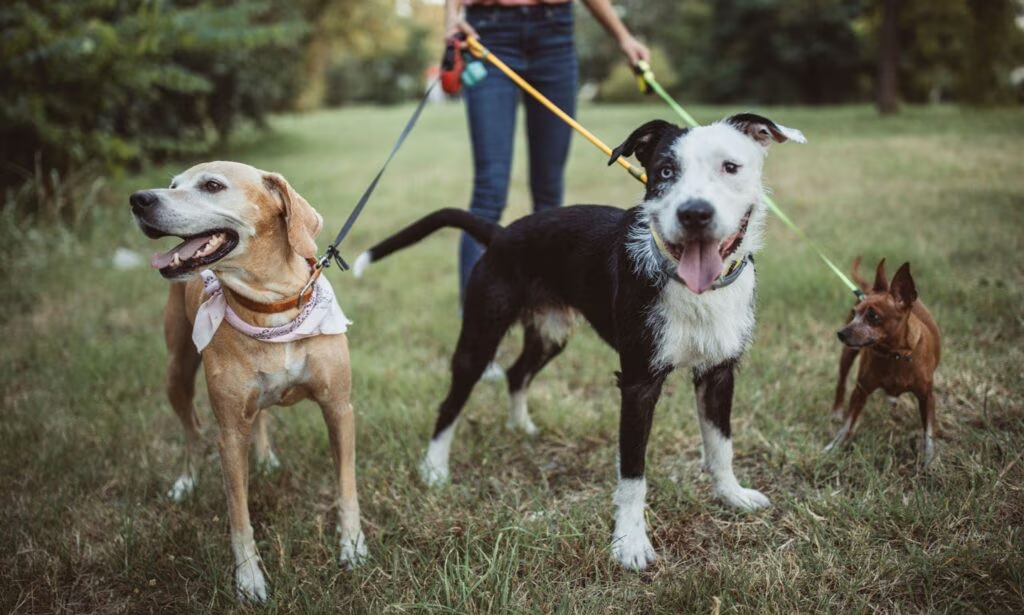
Leash Training Tips for Reactive or Fearful Rescue Dogs
Leash training a reactive or fearful rescue dog requires patience, strategy, and a focus on building confidence rather than just obedience. Unlike puppies, many rescue dogs come with past experiences that make them wary of other dogs, people, or sudden noises. A well-planned approach helps your dog feel safe while teaching them that walks are predictable and enjoyable.

Understanding Reactivity in Rescue Dogs
Reactivity is often fear-based rather than aggression-based. Common triggers include:
-
Other dogs on the sidewalk
-
Loud vehicles or construction noises
-
Crowds or fast-moving pedestrians
-
Strangers approaching
Organizations like ASPCA note that reactive behavior is a survival mechanism. It is a signal that your dog feels threatened or uncertain — not a sign of a “bad” dog.
Recognizing triggers helps you prevent escalation and guide your dog toward calm behavior.
Step 1: Choose the Right Equipment
For fearful or reactive dogs, safety and comfort are crucial:
-
Harness over collar: A front-clip or no-pull harness prevents choking and provides better control.
-
Leash length: Use a 4–6 foot leash for control while allowing some exploration.
-
Optional head halter: For strong or highly reactive dogs, a head halter can help manage lunging safely, but it requires proper acclimation.
Never use prong collars, choke chains, or punishment-based devices — these can increase fear and reactivity.
Step 2: Start in Low-Stress Environments
Begin training in calm, controlled spaces:
-
Your backyard or a quiet park
-
Areas with minimal traffic and few distractions
This helps your dog focus on you and associate walking with positive experiences rather than fear.
Step 3: Use Positive Reinforcement
Reward-based training is essential for fearful dogs:
-
Treats for calm walking
-
Praise for looking at you rather than the trigger
-
Clicker or marker training to reinforce desired behavior
High-value rewards are especially effective for dogs who are anxious or easily distracted.
Step 4: Identify and Manage Triggers
Observe your dog closely:
-
Note distances where they notice triggers but remain calm
-
Maintain a safe “threshold” distance
-
Gradually decrease distance over time while rewarding calm behavior
Avoid forcing close proximity to triggers too soon — this can backfire and reinforce fear.
Step 5: Teach Focus and Engagement
Training your dog to pay attention to you during walks reduces stress:
-
Use cue words like “watch me” or “look”
-
Reward eye contact
-
Change direction to regain attention if your dog fixates on a trigger
This strengthens your bond and gives your dog a sense of control over the situation.
Step 6: Use Desensitization and Counter-Conditioning
Pair exposure to triggers with something positive:
-
Treats when a car passes calmly
-
Praise for ignoring another dog
-
Gradual exposure to noises or people at a distance
Over time, your dog begins to associate previously scary stimuli with positive experiences.
Step 7: Practice Consistency
-
Walk at predictable times
-
Keep a calm demeanor — your anxiety can transfer to your dog
-
Reinforce good behavior every walk
-
Avoid scolding or punishing lunging or barking
Even short, calm walks daily are more effective than sporadic long sessions.
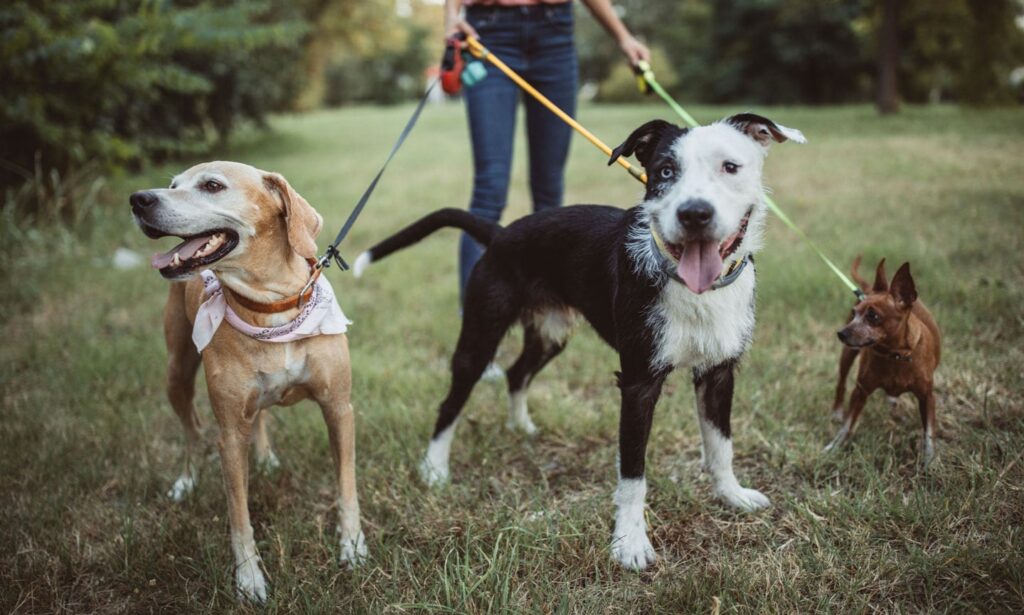
Step 8: Know When to Seek Professional Help
Reactive or fearful dogs may require professional guidance if:
-
Lunging escalates to biting or snapping
-
Fear responses are severe or persistent
-
You are unsure how to safely expose them to triggers
Force-free certified trainers or veterinary behaviorists can design personalized desensitization plans.
Safety Tips
-
Always keep your dog on a secure leash; avoid retractable leashes with reactive dogs
-
Avoid crowded areas until your dog is ready
-
Carry high-value treats and a backup leash or harness
-
Consider short walks multiple times a day instead of one long, stressful session
Transform your dog’s behavior with Off Leash K9 Training – Madison. As part of the fastest-growing dog training company in the U.S., we offer expert training that helps dogs of all breeds, sizes, and ages achieve top-notch obedience without a leash. Whether you need private lessons or behavior consultations, our proven methods ensure a strong bond between you and your dog. Contact us today at (608) 305-8050 to explore our training programs and start your journey to a well-behaved, off-leash pup!


